2026-10-26 · Frank Sullivan
How to Size a Dumpster for Typical Baltimore Row Home Projects
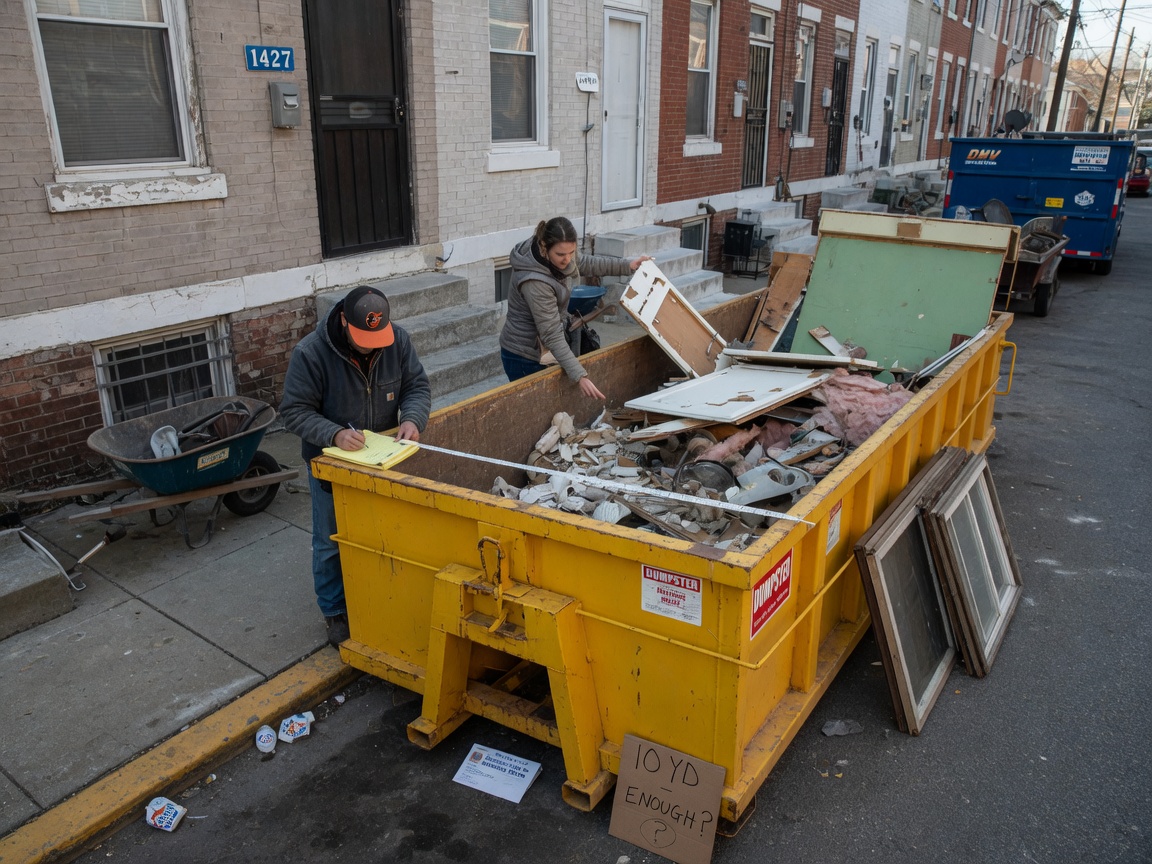
For typical Baltimore row home projects such as kitchen updates or basement cleanouts, a 10-yard or 15-yard dumpster usually handles the waste load, while full interior renovations often require a 20-yard unit to stay efficient without multiple hauls.
Baltimore Row Home Constraints
Row homes in neighborhoods like Fells Point, Canton, and Federal Hill feature narrow lots and shared walls that limit staging areas for equipment. These homes, often built before 1920, generate debris from plaster, lath, and narrow stairwells that complicate hauling. Placement on the street or alley requires checking alley widths in Mount Vernon or Hampden, where tight turns affect truck access. A 10-yard dumpster fits most driveways or small rear yards without blocking neighbors, while larger sizes need permits for street placement. Local terrain includes slight slopes toward the harbor that can cause shifting loads during loading. Residential Dumpster Rental options from operators familiar with these blocks help match container dimensions to the actual footprint available on site.
Waste Volumes for Common Projects
Basement cleanouts in Locust Point or Bolton Hill typically produce 4–8 cubic yards of mixed debris including old appliances and flooring. Kitchen or bath remodels in Charles Village row homes average 6–12 cubic yards when removing cabinets, tile, and drywall. Full roof replacements or whole-house gut jobs in Patterson Park or Reservoir Hill push totals to 15–25 cubic yards because of asphalt shingles and lumber. Hot summers increase the need for covered containers to manage odor from food waste or vegetation, while cool winters can freeze materials and reduce compaction. Tracking these volumes prevents over-ordering and keeps projects on schedule without repeated trips to landfills serving the independent city.
Matching Sizes to Project Scope
Start with a 10-yard container for single-room updates because it holds roughly 3–4 pickup truck loads and maneuvers into alleys common in Hampden. Scale to a 15-yard unit when combining two rooms or adding exterior work, as it accommodates 5–6 truck loads without exceeding weight limits on older streets. A 20-yard dumpster suits larger renovations spanning multiple floors, holding 6–8 truck loads while fitting the longer frontage found near the Inner Harbor or Fort McHenry. Always measure the available space first, accounting for the 8-foot width of most standard roll-offs. Over-sizing wastes money on unused capacity, while under-sizing leads to extra fees when loads exceed the rim.
Placement and Access Realities
Street placement in dense blocks like those around the Baltimore Museum of Art or Oriole Park at Camden Yards often requires checking local rules before delivery. Rear-alley access works better in areas such as Locust Point where homes back onto wider lanes, but low branches or overhead wires can block taller containers. During humid subtropical summers, soft ground near the water table in low-lying spots may need plywood under the wheels to prevent sinking. Winter conditions bring ice that affects traction for trucks serving neighborhoods near Annapolis or Columbia routes. Readers planning street use should review Baltimore Dumpster Permit Rules for Street Placement to understand timing and documentation needed for their specific block.
Seasonal Adjustments in Baltimore
Cool winters in the region slow loading because frozen soil and materials add weight without extra volume, so operators recommend slightly larger sizes for projects running November through March. Hot summers accelerate vegetation growth around Patterson Park, increasing yard-waste loads that compact less efficiently. Rain events common in this climate can saturate debris, pushing weights higher and requiring attention to load distribution. Winter Dumpster Access Tips for Baltimore Neighborhoods covers how snow and ice change delivery windows in places like Reservoir Hill. Planning container size around these patterns reduces delays when working on row homes in Canton or Federal Hill throughout the year.